

New BISP Qist Schedule 2026
New BISP Qist Schedule 2026 of Rs 14,500 for the year 2026 has created a strong wave of anticipation among deserving families across Pakistan. For many households, this support is not just a payment it is a lifeline that helps them manage food, medicine, school fees, and other essential needs. Based on early internal updates, the first qist of 2026 is expected to be released in mid-February, most likely between February 15 and February 20. Although the final date will be announced only through an official BISP notification, the groundwork underway inside administrative departments indicates that the schedule is nearing completion.
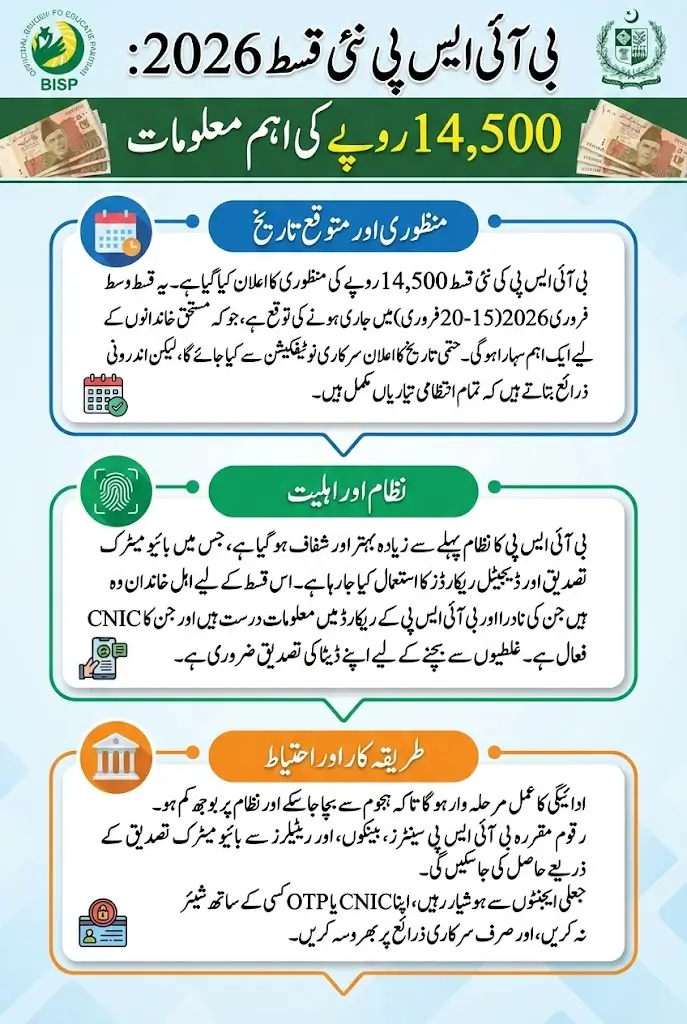
Over the years, BISP has improved its system significantly. From biometric verification to phased distribution and digital records, the program continues to refine its method to ensure smoother, more transparent payments. This year, the internal activity suggests that the department is preparing for an earlier rollout compared to previous cycles. As someone who has followed BISP developments closely, I can say that such movement inside the system usually means that the government is in the final stage of announcing the schedule.

You Can Also Read: PM Ramzan Relief Package 9999 Online Check
Overview of the New BISP Qist 2026
The 2026 BISP installment carries increased importance at a time when inflation continues to challenge families throughout Pakistan. This Rs 14,500 qist is part of the government’s ongoing promise to provide direct financial support to households with limited income. Each year, the program processes millions of beneficiaries, and every qist cycle requires extensive coordination with NADRA, the banking system, and district administrations.

This year, officials have spent the past few weeks updating records, checking CNIC status, and verifying beneficiary lists. These internal checks ensure that payments reach the right individuals without errors. Early indications show that the system’s updating phase is almost complete—this is usually the final step before BISP publishes the official notification.
You Can Also Read: Pakistan Introduces New Currency Notes 2026

Key points regarding the 2026 installment:
- Expected amount: Rs 14,500
- Likely release window: February 15–20, 2026
- Final date pending BISP headquarters announcement
Expected Release Window for Rs 14,500
The most discussed question among beneficiaries right now is when the new qist will begin. According to sources within the district-level teams, payments are being scheduled for mid-February. While such windows are shared as internal timelines, they often match the official dates that later appear on BISP’s website or helpline.
The 15 to 20 February range is based on operational readiness. District offices are coordinating with payment centers, verifying beneficiary lists, and ensuring that all technical systems are ready before the large-scale rollout begins. Such preparation is essential because payment centers deal with heavy footfall, especially in rural areas where families must travel long distances.
You Can Also Read: CM Punjab Free Solar Panel Scheme 2026 Eligibility
Indicators supporting the expected window:
- Activity inside verification teams
- Software and payment center sync operations
- District-level staff preparing beneficiary lists
Phased Distribution Plan for Beneficiaries
The BISP payment process has evolved over time to avoid long queues and overcrowding. The phased distribution method has become a standard practice in all major installments. Payments do not begin in all districts at once; instead, they are released in carefully planned phases based on population, system load, and district readiness.
This phased strategy not only protects beneficiaries from unnecessary stress but also allows staff to handle large volumes in an orderly manner. Each phase typically targets a specific set of districts, ensuring that the system remains stable. For many families, this planning makes the experience smoother and safer.
Possible Payment Phase
| Phase | Target Beneficiaries | Expected Dates |
|---|---|---|
| Phase 1 | Verified families in major cities | Feb 15–17 |
| Phase 2 | Rural and semi-urban districts | Feb 17–19 |
| Phase 3 | Pending verifications and special cases | Feb 19–20 |
This table reflects the typical pattern followed in previous cycles, and while the exact schedule may differ, the overall approach is expected to remain the same.
You Can Also Read: Punjab Business Portal 2026: Online Registration
Eligibility Confirmation for the 2026 Installment
Eligibility for the Rs 14,500 qist is determined based on the latest government records. Families that have completed their NSER verification and maintain an active CNIC are generally included. The system automatically excludes cases where CNICs are expired or where mismatched information exists between NADRA and BISP databases.
In many areas, families who participated in the recent survey are being prioritized because their data is updated. If someone’s name does not appear in the current list, the issue usually relates to data verification. Beneficiaries should ensure that their records are complete before payments start.
Eligibility requirements include:
- Active CNIC
- Verified NSER family data
- Phone number registered for SMS alerts
How Families Should Prepare Before Payments Start
Having observed multiple payment cycles firsthand, it is clear that the families who prepare early face fewer problems. The most common issues occur when beneficiaries arrive with expired CNICs or unregistered numbers. Moreover, biometric issues such as weak fingerprints often cause delays, especially for older women.
To avoid such problems, beneficiaries should check all documents in advance and resolve any verification issues through NADRA or local BISP offices. This simple step can save hours of waiting once the payment cycle begins.
Recommended preparations:
- Check CNIC expiry date
- Ensure phone number is active
- Keep original documents in hand
- Confirm beneficiary status through official channels
You Can Also Read: Punjab eBiz Portal Services List 2026
Important Details Shared by Early Sources
The internal updates circulating among officials suggest that the government has already completed most of the administrative work required for the new qist. Such updates, while not official, often reflect the real progress made within the system. The biggest indicator is that district offices have started syncing their data with the central BISP servers, which typically happens days before the payment cycle begins.
While these early updates provide clarity, beneficiaries should wait for the official announcement before visiting any payment center. Unofficial updates help people prepare but should not be treated as confirmation.
Key highlights from early internal activity:
- Beneficiary lists updated
- Payment center staff mobilizing
- System testing in progress
You Can Also Read: Vivo Y500i Launch Details 2-Day Battery Backup
Where and How Payments Will Be Collected
Payments for the new installment will be available at designated BISP payment centers, partner banks, and authorized retailers. Biometric verification remains mandatory to ensure that the payment goes directly to the registered beneficiary. This method prevents fraud and ensures transparency.
At most centers, women beneficiaries are required to visit in person for thumb verification. Some areas also have mobile payment units for remote villages, although availability varies by district. Families should remember to collect the payment slip after receiving the amount for record-keeping.
Collection requirements:
- Original CNIC
- Biometric verification
- Physical presence of beneficiary
- Keep printed receipt safely
Important Precautions for Beneficiaries
Every payment cycle attracts individuals who try to deceive uninformed beneficiaries. It is essential for families to remain alert and avoid sharing personal information with unauthorized persons. No agent or representative has the right to ask for money in exchange for speeding up the process or verifying documents.
Beneficiaries should never hand over their CNIC or share SMS codes with unknown individuals. All official updates come from verified BISP numbers or the Benazir portal. If any center deducts money illegally, the complaint should be reported immediately.
Precautionary measures:





- Avoid sharing CNIC copies with strangers
- Verify every update through official channels
- Do not pay any agent or fee
- Count your payment before leaving the center
Final Notes
The mid-February release of the new BISP installment is a timely relief for millions of Pakistani families struggling to manage household budgets. While the official notification is still awaited, the progress made within administrative networks strongly suggests that payments are just around the corner. Beneficiaries should prepare their documents, verify their status, and remain updated through official BISP announcements.
Once the final schedule is issued, the government will share the exact dates and complete district-wise plan. Until then, families should remain patient and avoid unnecessary visits to payment centers. The Rs 14,500 qist, once released, will play a significant role in helping low-income households cope with rising living expenses, ensuring that they can manage essential needs with dignity.
